
Eagle · Garfield · Pitkin · Summit County, Colorado
Deck Repair & Restoration
Soft boards. Loose railings. Stairs that give a little.
Snow, meltwater and overnight freezing take a deck apart from the inside, one season at a time. I’ll come out, get under it, and tell you straight what it needs — a board-and-railing repair, a resurfacing, or a full rebuild.
- 11 years in these mountains
- $0 for the estimate
- 1 carpenter — the one who shows up
Why decks fail up here
The damage you can see isn’t the damage that matters
Water plus freezing is what takes a deck apart, and in this part of Colorado you get both for most of the year.
Only July and August come through clean. Source: NOAA climate normals, 1991–2020.
In Vail that works out to roughly 189 inches of snow a year, spread across about 67 separate snow days — and every one of them is another round of melt during the day and freeze overnight. Water soaks into the board, expands when it freezes, and works the fibers apart. Hundreds of times a season, for years.
The freezing also runs later into the year than most people expect. The National Weather Service puts the average last spring freeze at May 18 in Glenwood Springs, May 19 in Rifle, June 16 in Aspen and July 5 in Steamboat Springs. And in Colorado’s high mountain valleys, where cold air pools, the first fall freeze can arrive by the first week of September.
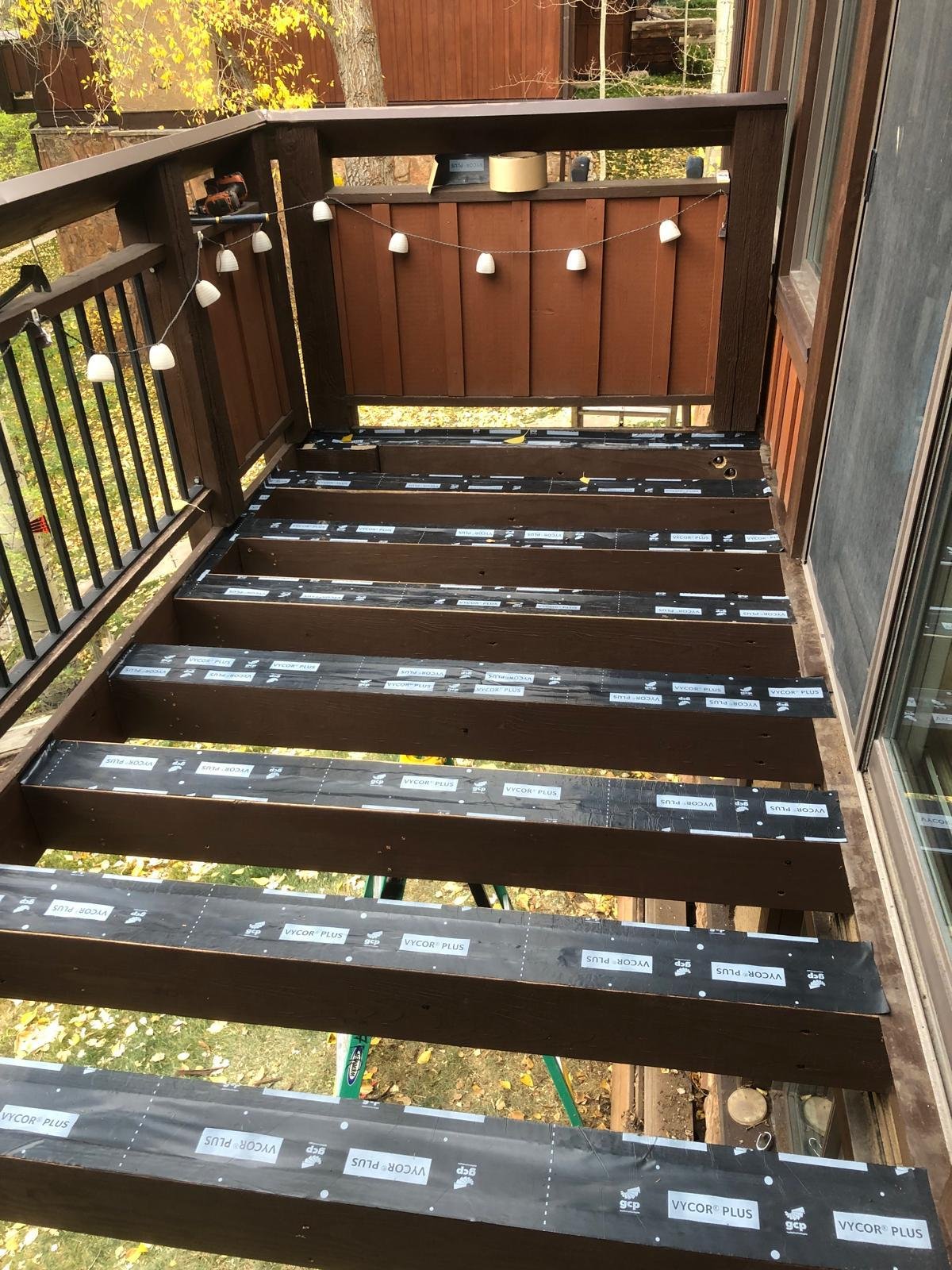
People notice the decking first: boards going gray, splintering, cupping at the edges. But the decking is rarely the real problem. Underneath, the same water has been sitting on the joists, the beams and the ledger board where the deck attaches to the house. Those are the parts holding the weight.
By the time a board feels spongy underfoot, the structure below it has usually been wet for several seasons. And a deck almost never looks dangerous right before it fails — I’ve been called to fix a deck after a tenant caught her heel on a failing board and ended up in the emergency room. From the kitchen window it had looked fine.
What I repair
From one bad board to the whole structure
- Rotted & cracked deckingDeck board replacement or full deck resurfacing, matched to what you already have.
- Joists, beams & postsStructural members that have taken on water — sistered or replaced.
- Ledger board repairWhere the deck meets the house. The most common failure point, and the most dangerous.
- Deck railing repairLoose sections, wobbly posts, and full railing replacement to current height.
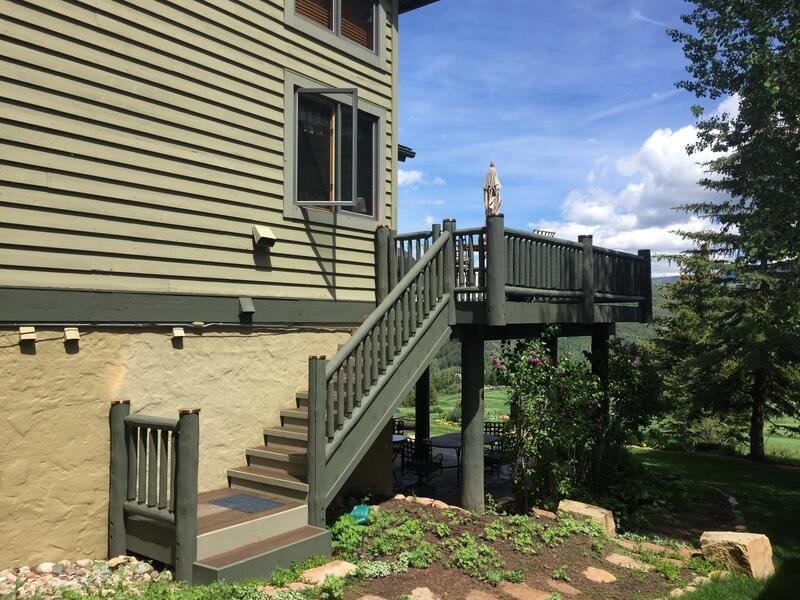
- Stairs & stringersSoft treads, sagging steps, rebuilt stairs that feel solid again.
- Footings & settlingLeaning posts, deck post repair, and decks that have dropped on one side.
- Full deck restoration & rebuildsWhen repair stops making sense — and I’ll tell you when that is. See new deck building.
Pressure-treated, cedar, composite and hardwood. Hardwood decking in particular has to be pre-drilled and countersunk or the screws snap off in the board — beautiful material, but it doesn’t forgive shortcuts.
From a customer
★★★★★
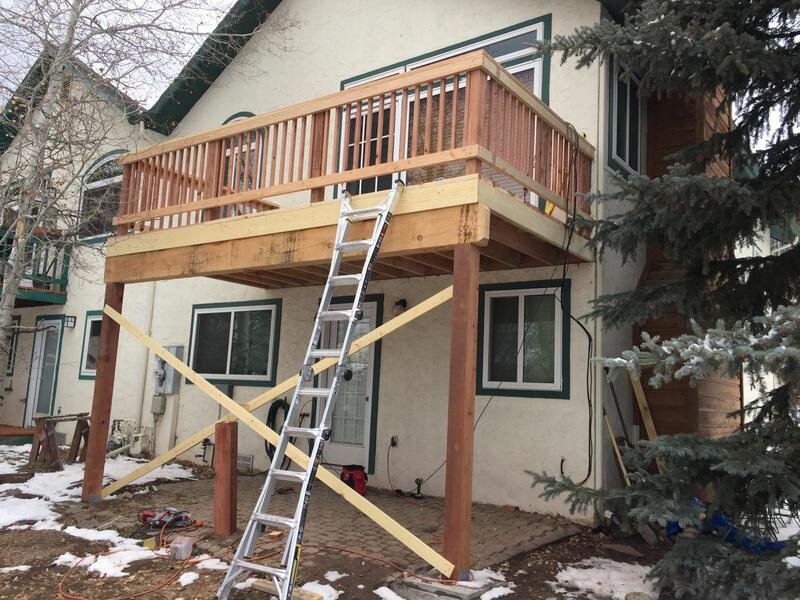
“Esaú completed a deck remodel for us and provided a reliable timeline for the project’s completion. The deck exceeded our expectations; he listened to our request, incorporated the details we wanted, and paid close attention to everything we envisioned. Everyone compliments its beauty, and we are thrilled we chose him for our remodel. Thank you, Esaú!!”
A reliable timeline. That’s the part most people are really asking about when they call — not whether the work will be good, but whether anyone will show up and finish. Cherie recorded this on her own phone after the deck was done.
How it works
Four steps, no surprises
On site, in person, no charge. I get under the deck where I can, because that’s where the answer usually is.
Repairable, rebuild, or wait — I’ll tell you which. I’ve talked people out of jobs I could have taken.
Built from how many days the job takes and how many hands it needs. Not a number pulled out of the air.
I’m not a sales office that subcontracts your job down a chain. When you hire me, I’m the one on your deck.

Who you’re calling
Esaú Bejarano Williams
Twins Wood Works is a family business. Eleven years of carpentry in these mountains — decks, window replacement, interior and exterior trim, siding and fences — most of it in Eagle and Garfield County. I don’t install cabinets or doors, and I’ll tell you that up front rather than take the job and figure it out later.
“I tell people what works for them and what doesn’t, and nothing else. If I can’t do the job right, I’ll say so and tell you to find someone who can.”
When you call this number you get Esaú — not a call center, not a dispatcher, and not a company that sends the job down a chain of subcontractors until whoever shows up is three people removed from the price you agreed to.
Request your free estimateWhat deck repair costs
No honest quote happens over the phone
Anyone who gives you a deck repair number sight unseen is guessing. Here’s what actually moves the price — and why catching it early is always cheaper.
Swapping surface boards is one job. Replacing joists and a ledger is another.
Pressure-treated, cedar and composite are three very different numbers.
A ground-level deck is straightforward. A second-story deck over a slope is not.
A board-and-railing repair is a fraction of a full rebuild. Always.
Where I work
Deck repair across Eagle, Garfield, Pitkin, Summit & Routt County
Most of my deck work has been in Edwards, Avon and Eagle. I run the I-70 corridor from Rifle and Glenwood Springs up through Vail, down the Roaring Fork Valley to Carbondale, Basalt, Snowmass and Aspen, and over to Summit County and Steamboat Springs.
Edwards, Avon, Beaver Creek, Vail, Eagle, Gypsum, Minturn, Wolcott
Glenwood Springs, New Castle, Silt, Rifle, Carbondale, Parachute
Aspen, Snowmass Village, Basalt, Woody Creek
Breckenridge, Frisco, Silverthorne, Steamboat Springs
Not sure if you’re in range? Call and ask. I’d rather tell you no on the phone than waste your time.
Common questions
What people ask before they call
How much does it typically cost to repair a deck?
It depends on how much of the damage is structural. Replacing surface boards on a sound frame is a modest job. Replacing joists, posts or the ledger board is a much bigger one, because the deck has to be supported while the structure comes apart. That’s why I look at it in person before giving a number — and why the estimate is free.
How can I repair a rotted deck?
It starts with finding out how far the rot goes. Soft, dark or crumbling wood usually means water has been sitting there for seasons. If the frame underneath is still solid, the decking can be replaced and the deck will last many more years. If the joists or the ledger are gone, replacing the boards only hides the problem — the structure has to be dealt with first.
Can I just replace the boards on my deck?
Sometimes, and it’s a good outcome when it’s possible. But the boards protect the frame, so if water got through the surface it has usually been reaching the joists too. I check the frame before recommending a board-only repair. If I can do the cheaper job honestly, I will.
My deck is rotting from underneath. What can I do to fix it?
Rot from below almost always means water is being trapped — no drainage, no airflow, or flashing that failed where the deck meets the house. Replacing the wood without fixing what caused it means you’ll be doing this again in a few years. I find the cause first.
What should I do if my deck joists are rotten?
Rotted joists are a structural problem, not a cosmetic one — they’re what carries the weight. Depending on how many are affected, they can be sistered or replaced. If most of the frame has gone, a rebuild is usually the better value. I’ll tell you which one you’re looking at.
How much does it cost to replace a rotted deck post?
Posts vary more than any other part, because it depends on what’s under them. A post on a solid footing is a straightforward replacement. A post that rotted because the footing failed or water pooled at the base means the footing has to be addressed too, or the new post rots the same way.
My deck is sinking. What can I do to fix it?
Sinking usually points to the footings — frost heave, settling, or footings that were never deep enough for this climate. It can also mean a beam or post has failed. Either way it’s structural and it doesn’t get better on its own. Stop using that section and have it looked at.
Can rotten deck boards be repaired?
Rotted wood can’t be restored — it has to be replaced. What can be repaired is the deck: you replace the compromised boards, address whatever let the water in, and keep the rest. Staining or sealing over rot only traps moisture and hides what’s happening underneath.
Do I need a permit to build a deck in Colorado?
It depends on the county or town, and on the size and height of the deck. Requirements are not the same in unincorporated Eagle County, in Garfield County, or inside town limits in Vail or Aspen. I’ll tell you what applies to your property before we start, so there are no surprises.
Get a free estimate on your deck
Call or text and I’ll come look at it. No charge, no obligation, and a straight answer about what it needs.
(970) 315-7766